EXECUTIVE SUMMARY


Introduction

The Municipality of Ayungon was created by virtue of Governor General Order No. 31, series
of 1924, by Governor General Leonard Wood on July 1, 1924. It is located northeast of Negros
Oriental with a total land area of approximately 28,168 square kilometers mostly devoted to
agriculture and housing. Based on the CY 2020 census, its population was reported at 47,102.
It is presently classified as a second-class municipality, envisioned to be the rice bowl of
Central Negros.

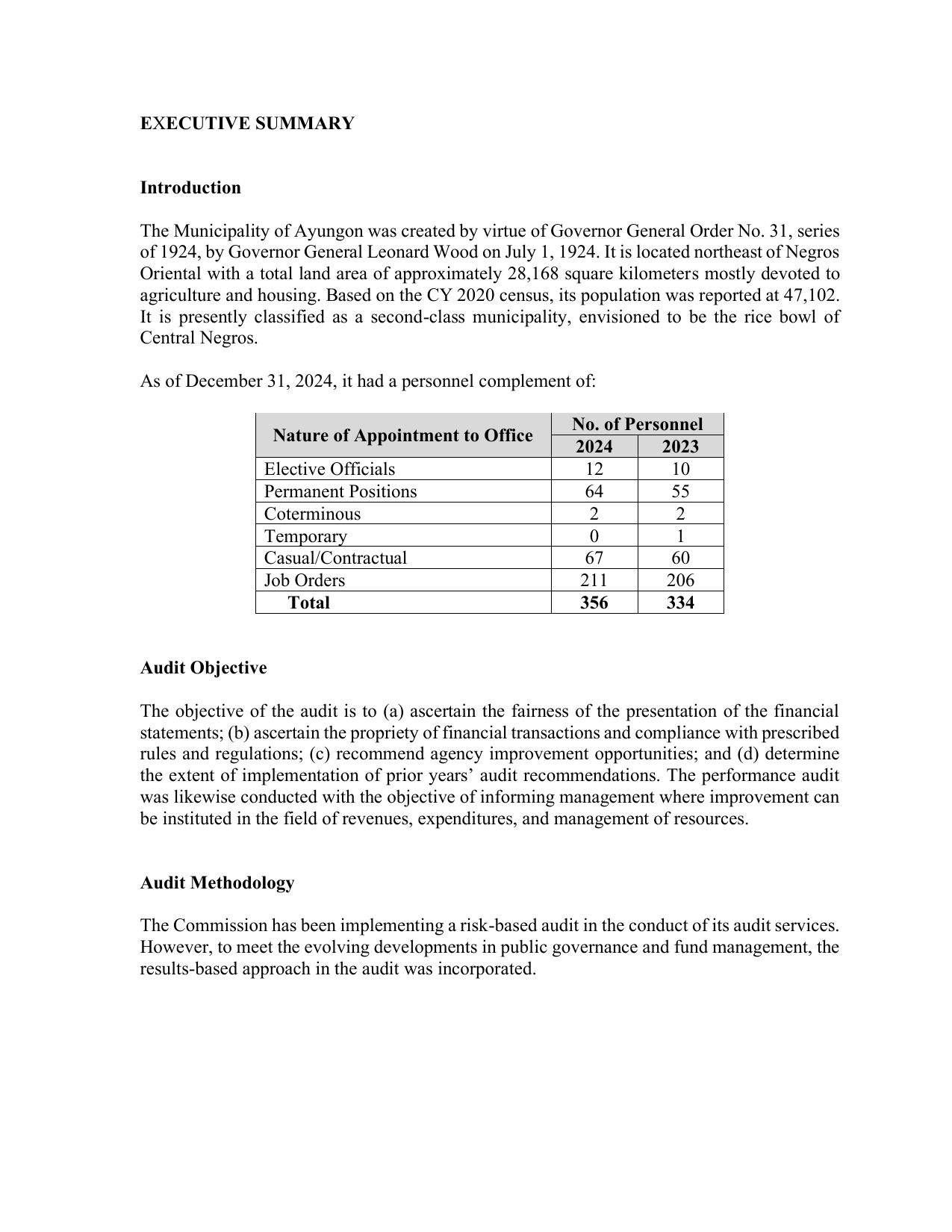
As of December 31, 2024, it had a personnel complement of:

                                                           No. of Personnel
                  Nature of Appointment to Office
                                                           2024       2023
                 Elective Officials                          12         10
                 Permanent Positions                         64         55
                 Coterminous                                  2         2
                 Temporary                                    0         1
                 Casual/Contractual                          67         60
                 Job Orders                                 211        206
                    Total                                   356        334


Audit Objective

The objective of the audit is to (a) ascertain the fairness of the presentation of the financial
statements; (b) ascertain the propriety of financial transactions and compliance with prescribed
rules and regulations; (c) recommend agency improvement opportunities; and (d) determine
the extent of implementation of prior years’ audit recommendations. The performance audit
was likewise conducted with the objective of informing management where improvement can
be instituted in the field of revenues, expenditures, and management of resources.


Audit Methodology

The Commission has been implementing a risk-based audit in the conduct of its audit services.
However, to meet the evolving developments in public governance and fund management, the
results-based approach in the audit was incorporated.