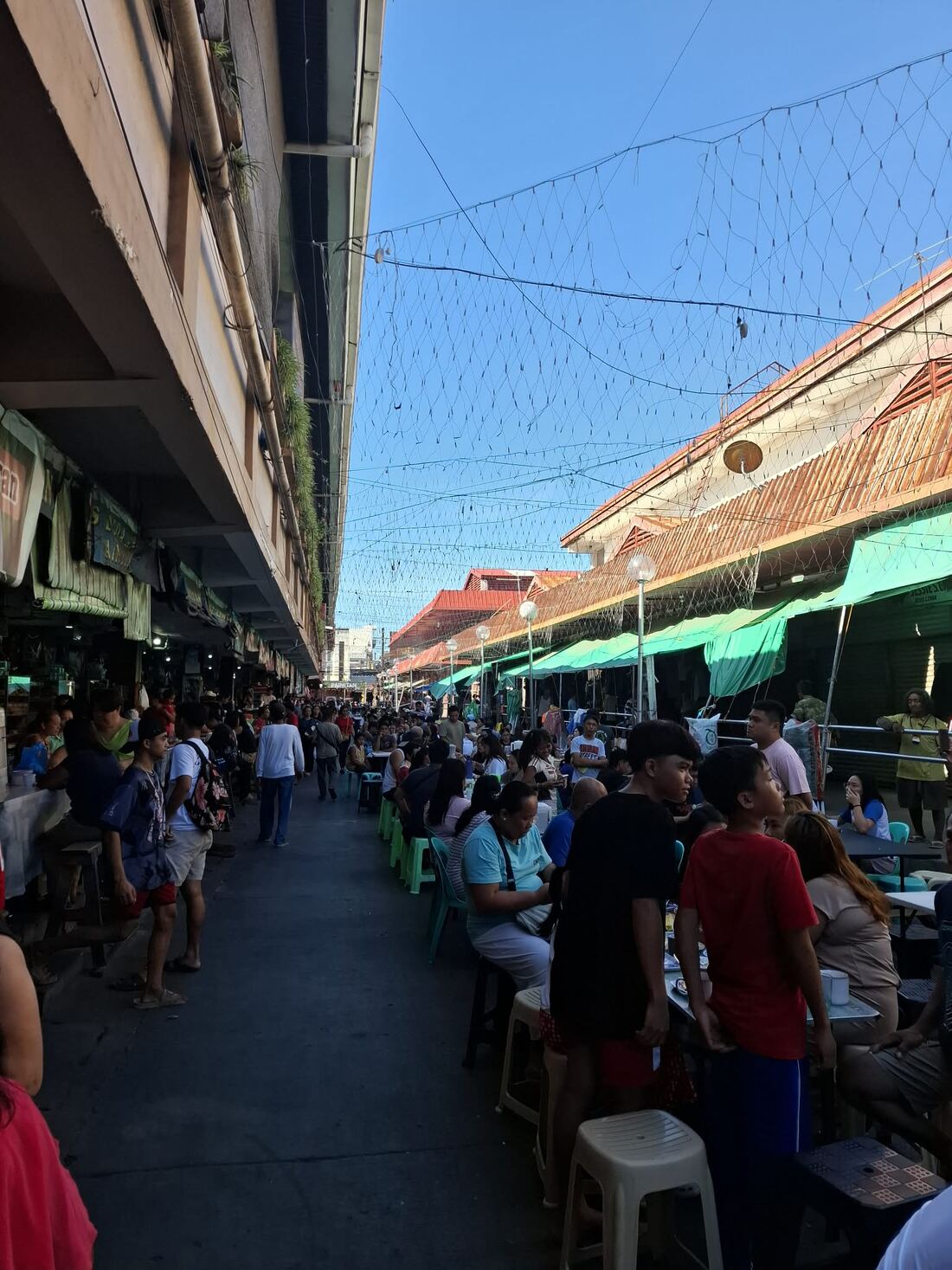
Dumaguete's Proposed ₱1.948-B Public Market Loan Would Be the Largest LGU Market Borrowing in the Philippines
DUMAGUETE CITY, Negros Oriental — May 10, 2026. Dumaguete City's proposed ₱1.948-billion four-storey public market would equal about 2.86 times the city's entire 2024 National Tax Allotment, the highest loan-to-NTA ratio among publicly identified local government public market projects in the country, an analysis of Bureau of Local Government Finance data shows.
The market component is part of a larger ₱2.185-billion proposed borrowing package that also includes a ₱237-million City Hall extension. The full package equals about 3.20 times the city's FY 2024 NTA of ₱682 million, or roughly ₱15,369 in city debt for every Dumaguetnon, based on the 2024 Census population of 142,171.
By contrast, the largest public market projects in the country are not loan-financed. Cebu City's ₱5.5-billion Carbon Public Market modernization is a 50-year joint venture with Megawide. Iloilo City's ₱3-billion redevelopment of its Central and Terminal Markets was completed last year by SM Prime under a 25-year lease. General Santos City's ₱2.33-billion Palengke Heneral was awarded to Robinsons Land Corp. as a public-private partnership earlier this year.
In each of those cases, the private partner finances, builds, and operates the facility for a fixed term before turning it over. The host city carries no construction debt. Cebu City, in fact, receives ₱50 million a year in guaranteed payment from its joint venture partner, with a 10-percent escalation every five years.
The fiscal comparison
The Bureau of Local Government Finance's Statement of Receipts and Expenditures for FY 2024 lists Dumaguete City's National Tax Allotment at ₱681,521,676.96 and total current operating income at ₱1,207,943,727.67. The city's local-source revenue, mainly real property tax, business tax, fees and charges, and receipts from economic enterprises, was ₱498,198,431.80 for the same year.
Among comparable cities and one municipality with publicly reported public market loans, Dumaguete's proposed loan-to-NTA ratio of 2.86 stands well above Bacolod City's 0.28 (₱525-million Burgos market allocation, later realigned), Tacurong City's 0.64 (₱500-million mixed-purpose DBP loan), Mandaue City's 0.34 (₱400-million DBP loan for new public market), Talisay City's 0.40 (₱387-million Tabunok four-storey market funded by DBP and Landbank), and the Municipality of Moalboal's 2.42 (₱400-million Landbank-financed new public market).
Per-resident debt exposure in the same comparison runs from ₱840 in Bacolod to ₱4,276 in Tacurong, ₱1,097 in Mandaue, ₱1,467 in Talisay, and ₱10,528 in Moalboal. Dumaguete's per-resident exposure under the full ₱2.185-billion borrowing package would be ₱15,369.
Why the structure matters
A loan-to-NTA ratio of 2.86 means the city would commit nearly three full years of its national tax share to repay one building. The annual NTA is the principal funding source for teacher salaries, health services, road repairs, and city payroll. Servicing a ₱1.948-billion loan over the standard 15-to-20-year LGU loan term will absorb a measurable share of that NTA each year through amortization and interest.
The comparison does not establish that the project is overpriced. A four-storey public market may cost more depending on floor area, foundation requirements, mechanical and electrical systems, fire safety, parking, and vendor relocation. Inflation-adjusted construction costs have also risen since the 2018 completion of Talisay City's similarly four-storey Tabunok market.
But because Dumaguete's project is proposed as direct LGU borrowing rather than a private-partnership structure, the financial risk profile is fundamentally different from those of Cebu City, Iloilo City, and General Santos City. The obligation rests with the city and its taxpayers.
What the public can ask for
Before final approval, advocates of fiscal transparency typically expect the local government to publicly release the project's detailed cost breakdown and cost-per-square-meter calculation; the feasibility study and projected market revenue; the vendor rental schedule; the full debt-service schedule including interest rate, loan term, and annual amortization expressed as a share of the NTA; and the specific assessment of why a public-private partnership or joint venture, used by larger cities, was not pursued.
The city government should also publicly account for the status of current vendors and the Painitan section during construction, and the binding relocation, rental, and return-to-stall guarantees attached to the project.
The proposed borrowing package remains under deliberation. The Sangguniang Panlungsod has not yet finally approved or perfected the loan.
Sources: Bureau of Local Government Finance, Statement of Receipts and Expenditures by LGU, FY 2024 (Preliminary). Project cost and financing model from publicly reported records. Population from PSA 2024 Census.
Editor's note: This article is part of an investigative series. Verified figures only. No fabricated quotes.